
Air source heat pumps are a marvel of modern technology. They provide efficient heating solutions for homes and businesses alike.
Yet, their efficiency can vary greatly. This depends on several factors, including installation, maintenance, and usage.
Understanding these factors is key to maximising air source heat pump efficiency. It can lead to significant energy savings and a reduced environmental footprint.
In this guide, we delve into the intricacies of air source heat pump efficiency. We explore the factors that affect it and provide actionable tips to optimise it.
Understanding Air Source Heat Pumps
Air source heat pumps are a type of heating system. They use the principle of heat transfer to provide comfortable indoor temperatures.
These systems extract heat from the outside air. They then amplify it using a refrigeration cycle before distributing it indoors.
Here are some key features of air source heat pumps:
- They provide heating for radiators, water and underfloor systems
- They are highly energy-efficient.
- They can work in a wide range of outdoor temperatures.
How Air Source Heat Pumps Work
The operation of an air source heat pump is based on a simple principle. It’s the same one that makes your refrigerator work.
The heat pump uses a refrigerant to absorb heat from one place and release it in another. This process is facilitated by a compressor and a condenser.
In heating mode, the heat pump absorbs heat from the outside air. It then compresses the refrigerant, which increases its temperature.
The hot refrigerant is then passed through a heat exchanger. Here, it releases its heat into the building’s heating system.
The Role of COP and SPF in Efficiency
The efficiency of a heat pump is measured using two key metrics. These are the Coefficient of Performance (COP) and the Seasonal Performance Factor (SPF).
The COP is a ratio of the heat output to the electrical input. A higher COP means a more efficient heat pump.
The SPF, on the other hand, measures the efficiency over an entire heating season. It takes into account variations in outdoor temperature and heat pump performance.
Both COP and SPF are crucial in evaluating heat pump efficiency. They provide a comprehensive picture of the system’s performance under different conditions.
Remember, a high-efficiency heat pump can lead to significant energy savings. It can also reduce your carbon footprint.
Factors Affecting Heat Pump Efficiency
Several factors can affect the efficiency of an air source heat pump. Understanding these factors can help you maximise your system’s performance.
An important factor is the insulation of the building. Good insulation reduces heat loss, making the heat pump’s job easier.
The condition of the heat pump system also plays a crucial role. Regular maintenance can ensure optimal performance and efficiency.
Finally, the installation of the heat pump can significantly affect its efficiency. A properly installed system can operate at its peak efficiency.
Here are the main factors affecting heat pump efficiency:
- Insulation
- System condition
- Installation
Outdoor Temperature and Insulation
The outdoor temperature can significantly affect the efficiency of a heat pump. When it’s very cold outside, the heat pump has to work harder to extract heat.
This can reduce the system’s COP. However, modern heat pumps are designed to work efficiently even in cold climates.
Good insulation can help maintain a comfortable indoor temperature. It reduces the heat loss from the building, making the heat pump’s job easier.
System Maintenance and Installation
Regular maintenance is crucial for the efficiency of a heat pump. This includes cleaning the filters and checking the refrigerant levels.
A poorly maintained system can lose up to 25% of its efficiency. So, regular check-ups can save you a lot of energy and money.
Proper installation is also key. An improperly installed system can lead to reduced efficiency and performance issues. Always hire a professional for the installation of your heat pump.
Optimising Air Source Heat Pump Performance
Optimising the performance of your air source heat pump can lead to significant energy savings. There are several ways to achieve this.
Firstly, selecting the right size of heat pump for your space is crucial. A system that’s too large or too small won’t operate efficiently.
Secondly, consider using a heat pump with inverter technology. This can improve the system’s efficiency by adjusting the compressor speed to match the heating demand.
Regular maintenance is also key. This includes cleaning the filters and checking the refrigerant levels.
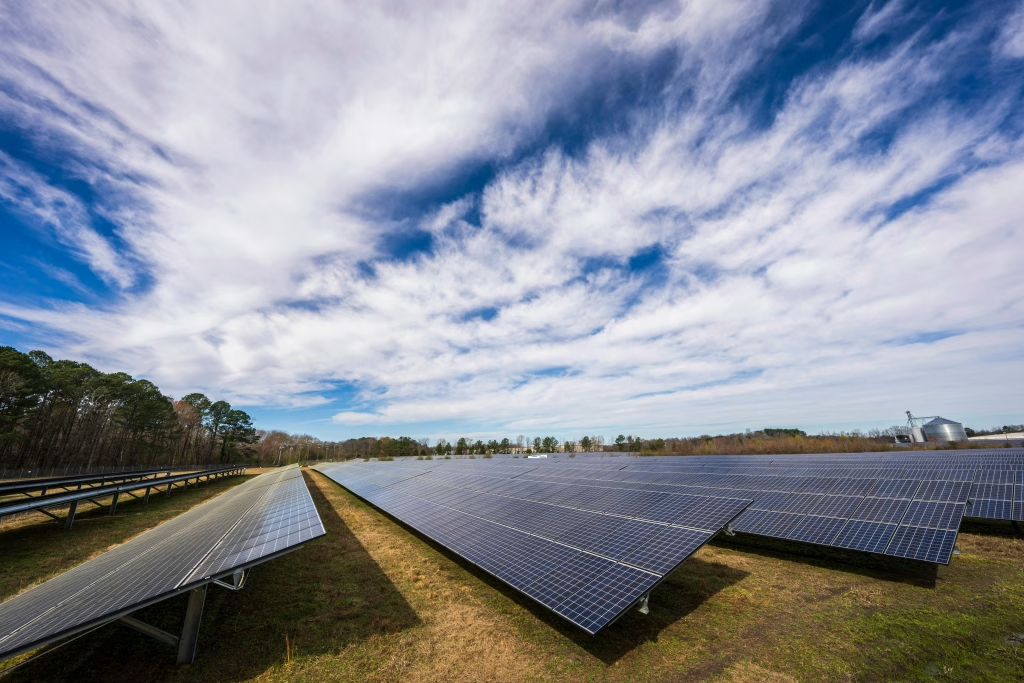
Finally, consider combining your heat pump with renewable energy sources, such as solar panels. This can further increase your system’s efficiency and sustainability.
Here are some ways to optimise your heat pump’s performance:
- Select the right size
- Use inverter technology
- Regular maintenance
- Combine with renewable energy
Selecting the Right Heat Pump Size
Choosing the right size of heat pump for your space is crucial for its efficiency. A system that’s too large will cycle on and off frequently, wasting energy.
On the other hand, a system that’s too small won’t be able to maintain a comfortable temperature. It will run continuously, leading to high energy consumption.
Therefore, it’s important to consult with a professional to determine the right size of heat pump for your space.
The Benefits of Inverter Technology
Inverter technology can significantly improve the efficiency of a heat pump. It adjusts the compressor speed to match the heating demand.
This means the system doesn’t have to cycle on and off frequently, saving energy. It also provides more consistent indoor temperatures.
Inverter technology can increase the COP of a heat pump, making it a worthwhile investment for energy savings.
Maintenance Tips for Peak Efficiency
Regular maintenance is key to maintaining the efficiency of your air source heat pump. This includes cleaning the filters and checking the refrigerant levels.
A dirty filter can restrict airflow and reduce the system’s efficiency.
The refrigerant level is also important. If it’s too low, the system won’t be able to heat or cool effectively.
A professional can check the refrigerant level and recharge the system if necessary. Regular maintenance can help your heat pump operate at peak efficiency.
Here are some maintenance tips:
- Clean the filter
- Check the refrigerant level
- Schedule regular professional maintenance
Regular Maintenance and Smart Thermostats
In addition to regular maintenance, using a smart thermostat can enhance the efficiency of your heat pump. A smart thermostat allows for more precise temperature control.
It can adjust the temperature based on your daily routine, saving energy when you’re not at home. Some models can even learn your schedule and adjust the temperature automatically.
By combining regular maintenance with smart thermostat usage, you can maximise the efficiency of your heat pump.
Combining Heat Pumps with Renewable Energy
Combining your heat pump with renewable energy sources can further increase its efficiency. For example, you can pair your heat pump with solar panels.
The solar panels can generate electricity to power the heat pump, reducing your reliance on the grid. This not only saves energy but also reduces your carbon footprint.
In addition, some heat pumps can be integrated with thermal energy storage systems. These systems store excess heat for later use, further improving the efficiency of the heat pump.
Enhancing Efficiency Through Building Design
The design of your building can greatly affect the efficiency of your air source heat pump. Proper insulation and airtightness are crucial for heat retention.
The ductwork design and condition also play a significant role. Leaky ducts can lead to heat loss, reducing the system’s efficiency.
Strategies for reducing heat loss include using insulation and sealing air leaks. These measures can help your heat pump operate more efficiently.
Here are some tips:
- Insulate your home properly
- Seal air leaks
- Check and repair ductwork
Insulation, Airtightness, and Ductwork
Proper insulation is key to maintaining a comfortable temperature in your home. It helps keep the heat in during winter and out during summer.
Airtightness is also important. Air leaks can lead to heat loss, making your heat pump work harder.
The condition of your ductwork can also affect the efficiency of your heat pump. Leaky ducts can lead to significant heat loss.
Reducing Heat Loss Through Windows and Doors
Windows and doors are common areas for heat loss. To reduce heat loss, you can use weatherstripping or caulk to seal air leaks.
You can also use window treatments or coverings to insulate your windows. These measures can help keep the heat in and the cold out.
By reducing heat loss through windows and doors, you can improve the efficiency of your air source heat pump.
Financial Incentives and Long-Term Savings
Investing in an air source heat pump can lead to significant long-term savings. These savings come from reduced energy bills due to the system’s high efficiency.
There are also financial incentives available for homeowners who install energy-efficient heating systems. These incentives can help offset the initial cost of the heat pump.
The Governments ‘Boiler Upgrade Scheme’ provides £7500 towards the installation of an Air Source Heat Pump, the main stipulation for receiving this incentive is that you’re a homeowner – you can find out more about this incentive here Boiler Upgrade Scheme
Cost Savings and Environmental Benefits
In addition to the financial savings, air source heat pumps also offer environmental benefits. They use renewable energy and can significantly reduce your home’s carbon footprint.
Over the long term, the energy savings can add up to a significant amount. This makes air source heat pumps a cost-effective and sustainable heating solution.
Remember, investing in an air source heat pump is not just about the upfront cost. Consider the long-term savings and environmental benefits as well.
Conclusion: The Future of Air Source Heating
Air source heat pumps are a promising solution for sustainable and efficient heating.
In the future, we may see more homes and businesses adopting air source heat pumps. This could significantly reduce our reliance on fossil fuels and help mitigate the effects of climate change.
In conclusion, maximising air source heat pump efficiency is not just beneficial for individual homeowners. It’s a crucial step towards a more sustainable and energy-efficient future for us all.