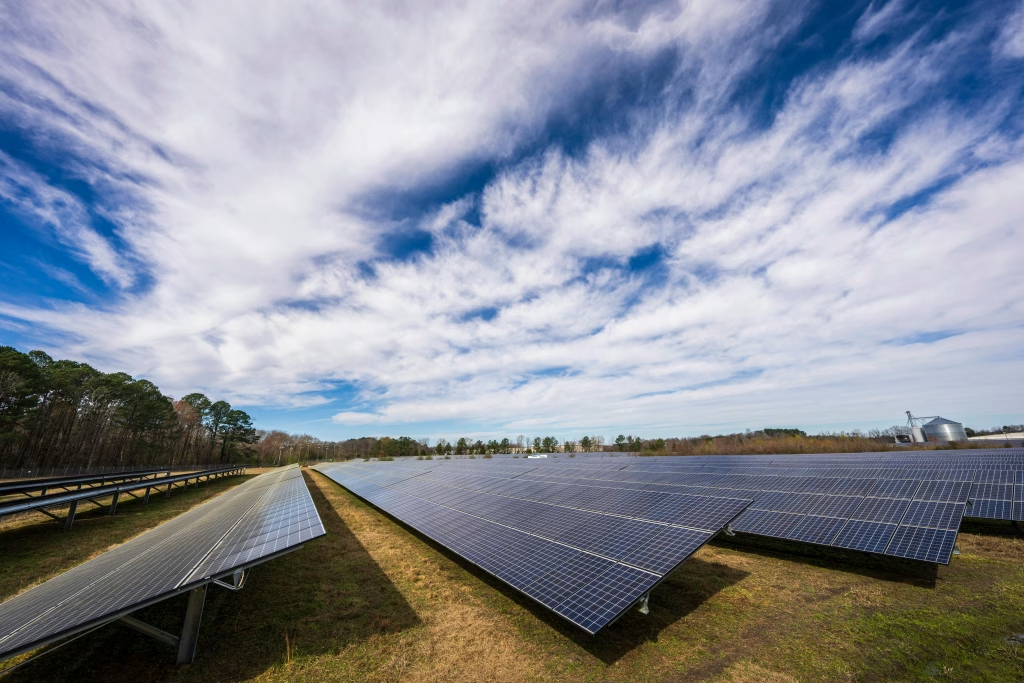

In a world increasingly focused on renewable energy, solar power stands as one of the most promising solutions to our ever-growing energy demands.
Solar panels, as the cornerstone of this technology, come in various forms.
Monocrystalline and Polycrystalline solar panels are the two most common types of photovoltaic cells used in solar panel technology, however, they differ in both their manufacturing processes and efficiency.
If you are looking to get solar panels for your home or business, contact our team and book a free survey – or call us on 01156 979 699.
Here are the key differences between the two:
Material Structure
Monocrystalline Solar Panels
Monocrystalline panels are made from a single crystal structure. The silicon used in monocrystalline panels is formed from a single continuous crystal lattice, which results in a higher purity of silicon.
Polycrystalline Solar Panels
Polycrystalline panels are made from multiple silicon fragments, usually the off-cuts and shavings from a monocrystalline panel, melted and cast into moulds. This process results in a less uniform structure with multiple crystal boundaries.
Efficiency
Monocrystalline Solar Panels
Monocrystalline panels are more efficient in converting sunlight to electricity. They have higher efficiency rates, often around 18-22%.
Polycrystalline Solar Panels
Polycrystalline panels are generally less efficient than monocrystalline panels, with efficiency rates usually in the range of 12-14%.

Cost
Monocrystalline Solar Panels
These panels are often more expensive than polycrystalline panels due to the higher manufacturing costs associated with the single-crystal structure.
Polycrystalline Solar Panels
Polycrystalline panels are generally more cost-effective and are a popular choice for budget-conscious consumers.
Space Efficiency
Monocrystalline Solar Panels
These panels require less space for the same power output due to their higher efficiency per cell.
Polycrystalline Solar Panels
Polycrystalline panels need more space to achieve the same power output as monocrystalline panels, due to the cells being less efficient at harnessing the suns radiation.
Aesthetics
Monocrystalline Solar Panels
These panels are typically black in colour and are often considered more aesthetically pleasing.
Polycrystalline Solar Panels
Polycrystalline panels are typically bluish in colour, with silver frames and backsheet. This not be as visually appealing to some.
Temperature Sensitivity
Monocrystalline Solar Panels
Monocrystalline panels are less affected by high temperatures and have a slightly better temperature coefficient, meaning they perform better in hot climates.
Polycrystalline Solar Panels
Polycrystalline panels may experience a more significant drop in efficiency in very high temperatures.
In conclusion, the choice between monocrystalline and polycrystalline solar panels depends on a variety of factors, including budget, available space, and aesthetic preferences.
Monocrystalline panels are more efficient and space-efficient but come at a higher cost, while polycrystalline panels are more budget-friendly but slightly less efficient.
The best choice for a particular situation will depend on the specific needs and constraints of the solar installation.
With this knowledge, you can harness the power of the sun to meet your energy needs efficiently and economically.
If you are interested in getting solar panels for your home or business, contact our team to book a free survey!